
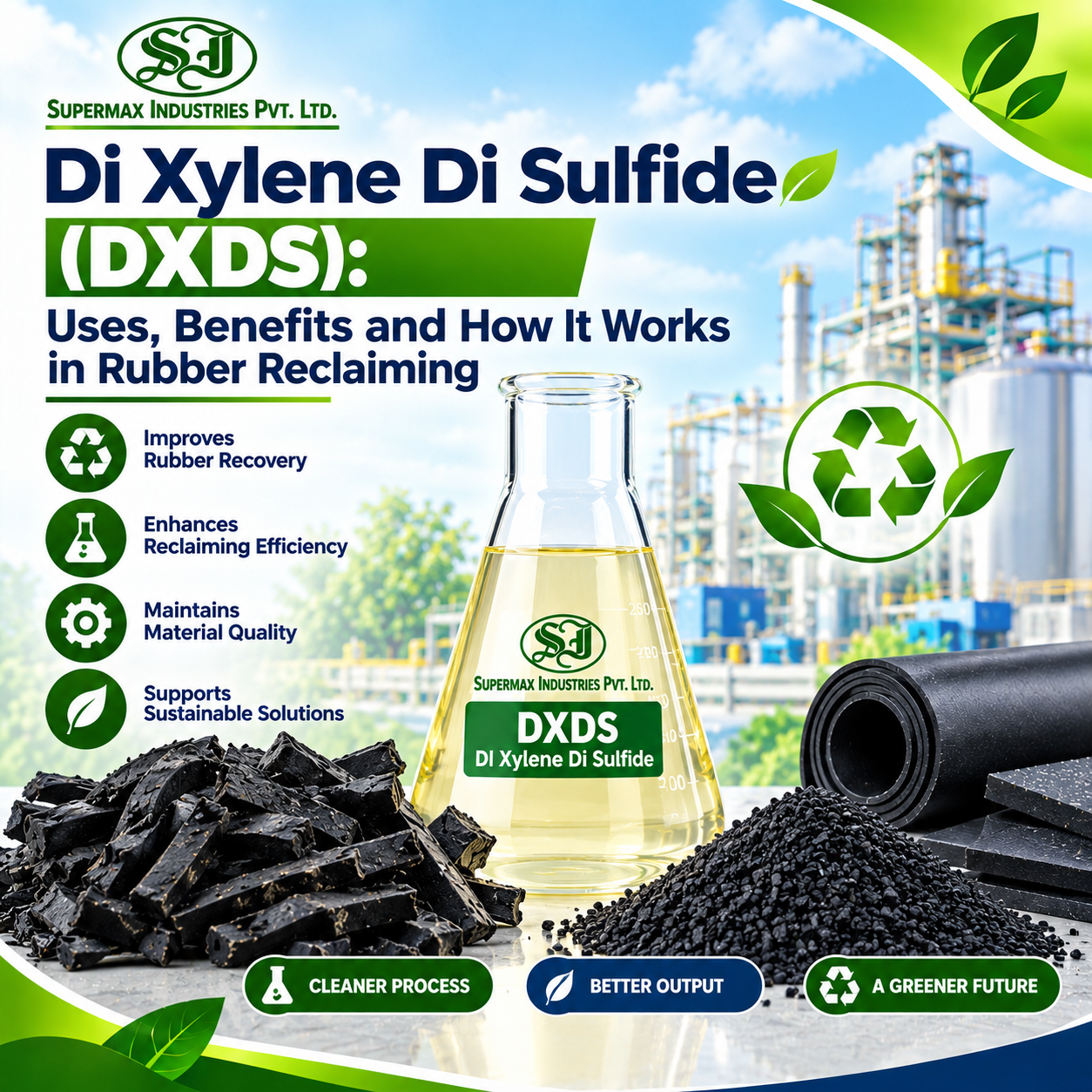
People in the trade call it DXDS isn't like ordering , and many buyers know the name without knowing much else about it. This guide fills that gap. You will learn what Di Xylene Di Sulfide is, how it works, how it compares with DADS and what to check before you buy it. It is written in plain words, so you can use it whether you run a plant or you are new to the chemical trade.
What Is Di Xylene Di Sulfide?
Di Xylene Di Sulfide is an organic sulfur compound. Picture two xylene rings joined together by a disulfide bridge, which is simply two sulfur atoms bonded to each other. That sulfur-to-sulfur link is the active part. It lets the chemical react with the sulfur cross-links inside vulcanized rubber.
In the rubber industry it is used mainly as a devulcanizing and reclaiming agent. You may see it written as DXDS, di xylene disulphide or di xylyl disulfide. Spellings change from one supplier to another, and sulfide and sulphide mean the same thing.
Why This Matters More Now Than It Did Five Years Ago
Tyre and rubber waste volumes have grown steadily, and so has pressure on manufacturers to source recycled rubber that performs close to virgin material. A cheap reclaiming chemical might reduce your raw material cost on paper, but if the output rubber fails tensile or elongation tests, you're paying for rework, downgraded product, or lost contracts. The maths only works if the reclaimed rubber is actually usable.
This is where the gap between a genuine Rubber Reclaiming Chemical Manufacturer, a trusted and a reseller repackaging someone else's stock starts to show. Manufacturers who run their own R&D can tune a formulation for specific feedstocks — tyre rubber, butyl, EPDM, natural rubber scrap — and adjust it when your process changes. A trader generally can't.
A Quick Word on Pricing
Reclaiming chemical prices swing with crude oil derivatives and sulphur markets, so a quote that looks unusually low compared to everyone else's is worth questioning rather than celebrating. Sometimes it's a genuine efficiency advantage. Often it's a diluted formulation or a supplier cutting corners on purity to win the order.
Final Thoughts
The right reclaiming chemical decision comes down to three things: a formulation that genuinely protects tensile strength, a manufacturer who can back that up with consistent batches and real technical support, and export handling that doesn't fall apart at the border. Skip any of the three and you're gambling with production downtime. Get all three right, and reclaimed rubber stops being a compromise material and starts being a genuinely usable input.