
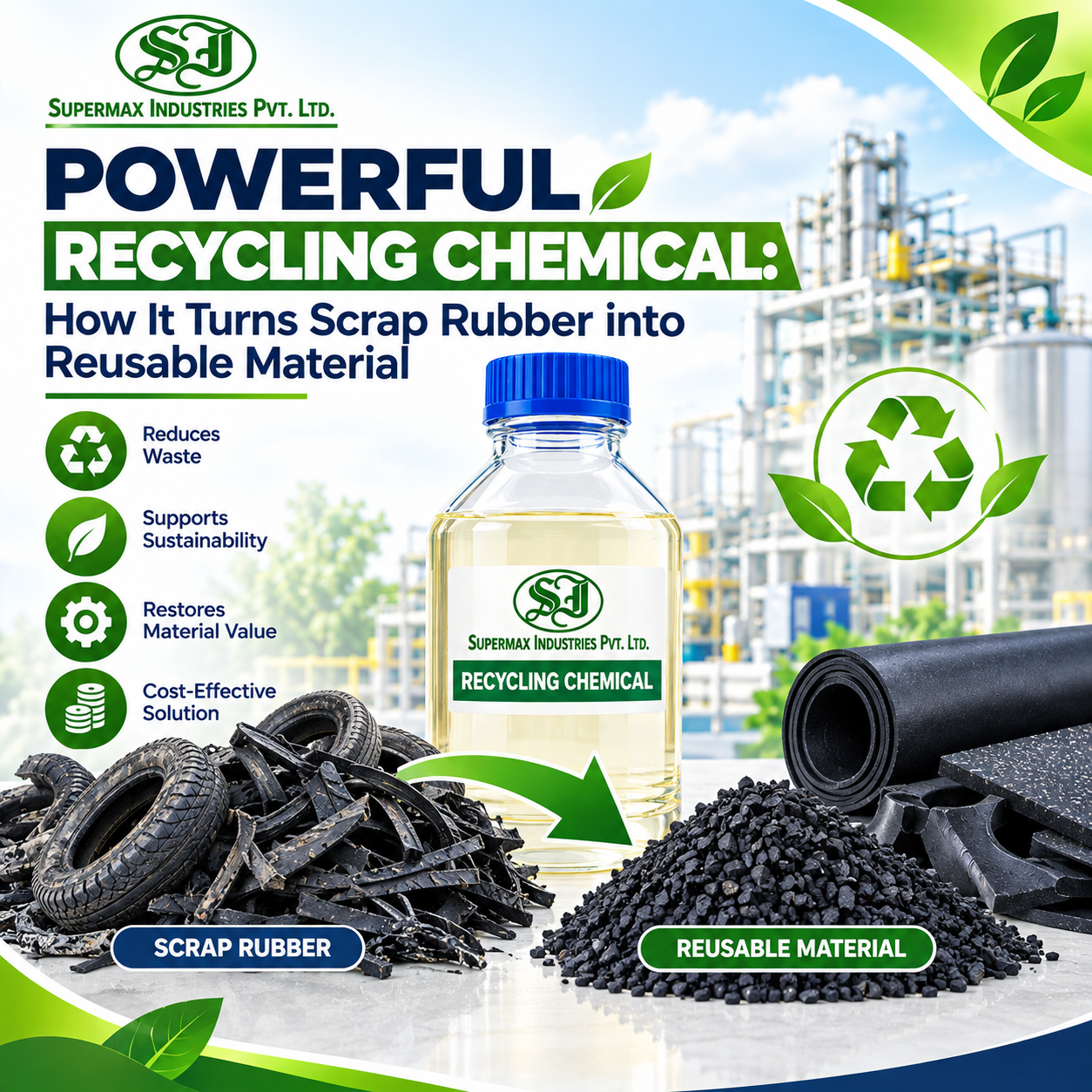
A Powerful Recycling Chemical isn't like ordering can turn stiff, vulcanized scrap into soft, reusable rubber, and it does so faster and with less energy than heat and force alone. This guide explains what such a chemical does, how it works inside a reclaiming plant, which compounds matter most and how to pick a supplier you can rely on. No heavy jargon, just what you need to know.
Why Scrap Rubber Needs a Powerful Recycling Chemical
Rubber becomes strong only after vulcanization, a process where sulfur forms bridges between the long polymer chains. Those bridges give a tyre its grip and its long life. They also make the rubber nearly impossible to remelt, because heat does not undo them.
Diaryl disulphide is the base compound most reputable manufacturers build these agents around. It works at moderate reclaiming temperatures, which matters because excessive heat during devulcanisation is usually what kills tensile properties in the first place. If a supplier can't tell you what's in their formulation, or dodges the question, that's worth noting before you commit to a drum, let alone a container.
Why This Matters More Now Than It Did Five Years Ago
Tyre and rubber waste volumes have grown steadily, and so has pressure on manufacturers to source recycled rubber that performs close to virgin material. A cheap reclaiming chemical might reduce your raw material cost on paper, but if the output rubber fails tensile or elongation tests, you're paying for rework, downgraded product, or lost contracts. The maths only works if the reclaimed rubber is actually usable.
This is where the gap between a genuine Rubber Reclaiming Chemical Manufacturer, a trusted and a reseller repackaging someone else's stock starts to show. Manufacturers who run their own R&D can tune a formulation for specific feedstocks — tyre rubber, butyl, EPDM, natural rubber scrap — and adjust it when your process changes. A trader generally can't.
A Quick Word on Pricing
Reclaiming chemical prices swing with crude oil derivatives and sulphur markets, so a quote that looks unusually low compared to everyone else's is worth questioning rather than celebrating. Sometimes it's a genuine efficiency advantage. Often it's a diluted formulation or a supplier cutting corners on purity to win the order.
Final Thoughts
The right reclaiming chemical decision comes down to three things: a formulation that genuinely protects tensile strength, a manufacturer who can back that up with consistent batches and real technical support, and export handling that doesn't fall apart at the border. Skip any of the three and you're gambling with production downtime. Get all three right, and reclaimed rubber stops being a compromise material and starts being a genuinely usable input.